Existing Information
Biodiversity / Ecosystems
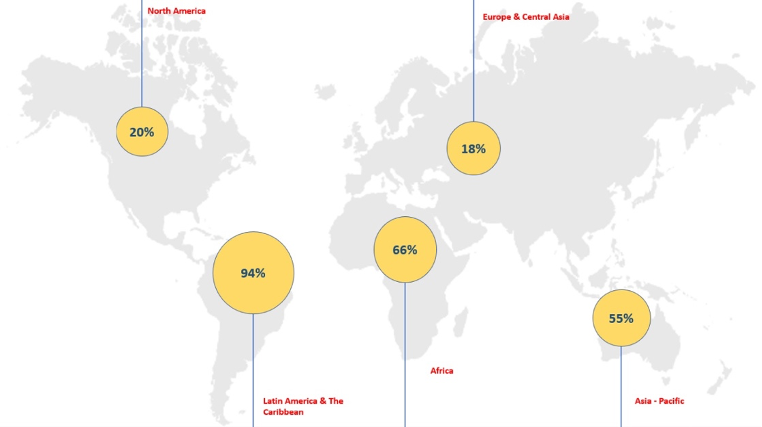
Biodiversity loss per region, from 1970 to 2018
Source : Living Planet Report 2022
Public-domain/commercial
Key Challenges
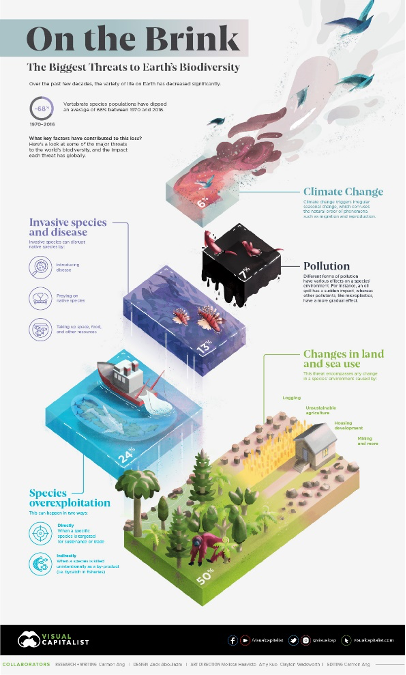
According to the Living Planet Report 2020 , the biggest threats to biodiversity are changes in land and sea use, species over exploitation, Invasive species and disease, pollution, and climate change
Changes in land and sea use
Species on land and in the sea are facing threats from unsustainable agricultural practices, logging, and other human activities such as housing developments, mining etc. It is estimated that fifty (50) percent of biodiversity challenges can be attributed to the above.
Species over exploitation
This is both direct and indirect over exploitation. Species are being directly overexploited through targeted threats for both trade and sustenance purposes e.g., overfishing and overhunting. Indirectly species are face threats in the form of accidental killing/death due as a byproduct of some activities such as fishing, it is estimated that twenty-four (24) percent of biodiversity challenges are because of over exploitation.
Climate Change
Climate change contributes to six (6) percent of biodiversity challenges due to its effects causing a disruption in seasons which causes migration and reproduction patterns to change.
Pollution
Approximately seven (7)percent of biodiversity challenges are due to several levels of pollution: air, water, and soil pollution. There are many sources of pollutants causing adverse effects on soil, freshwater, the oceans, and the atmosphere. These are greenhouse gas emissions, fertilizers used in agriculture, marine debris/plastic waste, oil spills, excessive noise, and light.
Invasive species and disease
- Biodiversity Conservation – e.g., protected areas
The main challenges facing protected areas are poor representation of habitats, lack of connectivity between protected areas, lack of funding, poor management, and human activity
- Env Due-Diligence – e.g., for project design/implementation
- Other emerging relevant challenges (development, CC, …)
- Holistic ecosystem perspectives
- Free, Public-domain data access
Emerging Needs
- Free, public-domain systems/ Appropriate modern analytics to support conservation and env due-diligence
- Improved collaboration
- Improved analytics (e.g., wrt water, cc, …)
Emerging Needs
- Free, public-domain systems/ Appropriate modern analytics to support conservation and env due-diligence
- Improved collaboration
- Improved analytics (e.g., wrt water, cc, …)