Financing & Incentives
Investments needed to support landscape management are several and have different objectives. Investments include those for monitoring systems, to produce data on the state of different variables relevant to decision-making in the landscape, and for infrastructure to manage the landscape, to more sustainably use and conserve resources and address key social, economic and environmental challenges as summarized above. The statistics below illustrate the ability of finance to support restoration and integrated landscape management approaches, and to reduce land degradation.
-
Ecuador’s 2023 debt-for-nature conversion is expected to generate more than US$450 million for marine conservation over 18 years.
Source: IDB -
Seychelles issued the world’s first sovereign blue bond to finance marine conservation and sustainable fisheries.
Source: World Bank -
Fiji became the first emerging-market country to issue a sovereign green bond.
Source: World Bank -
The US$150 million Wildlife Conservation Bond links investor returns to measurable rhino population growth in South Africa.[cite: 2]
Source: World Bank -
Blended finance uses concessional capital to reduce risk and attract private investment into nature-based solutions.
Source: Green Climate Fund -
Conservation trust funds can pool long-term public and private resources to finance biodiversity protection and ecosystem services.
Source: OECD
Preparation of a robust investment pipeline across a landscape requires attention to technical, environmental, social, economic, and institutional aspects of land degradation and restoration in order to facilitate implementation. In this space, adequate technical assistance and M&E play key roles. The video below provides detailed information on the economics of land restoration.
Overall, there is a need for multi-faceted, multi-sectoral, and multi-level investments to address existing and evolving challenges and benefit from the opportunities available through landscape-scale management.
These investments can include:
Institutional Infrastructure (for monitoring, institutional strengthening)
Landscape Investments (nature-based and structural) related to soil and water management, sustainable productivity improvement and climate resilience
Community Livelihood Improvement (e.g. climate-smart and eco-friendly agriculture)
Services (e.g. for data, capacity-building, harvest/storage/transport/marketing of sustainable produce)
Traditionally, investments in landscape conservation and restoration have relied heavily on government budgets, philanthropic donations, and multilateral lending through development institutions. Fiscal policy through government budgets has made up the majority of spending for positive biodiversity outcomes (see the figure below), with much smaller amounts being delivered by the philanthropic and private sectors. Given the estimated gap in funding and finance for nature ($700 billion annually), public funds cannot on their own generate the capital necessary to protect, enhance, and restore landscapes. Greater participation and leveraging private sources of capital and finance are necessary to close this gap.
Funding vs. Financing
The terms “funding” and “financing” are frequently used interchangeably but in the context of investment they mean different things.
Funding is money provided without the requirement or expectation of repayment. Funding can be provided by governments, philanthropy, and the private sector through donations and grants.
Financingis money provided with the requirement and expectation of repayment with varying levels of interest charged. Financing can take the form of zero to low-interest loans, to market-rate loans.
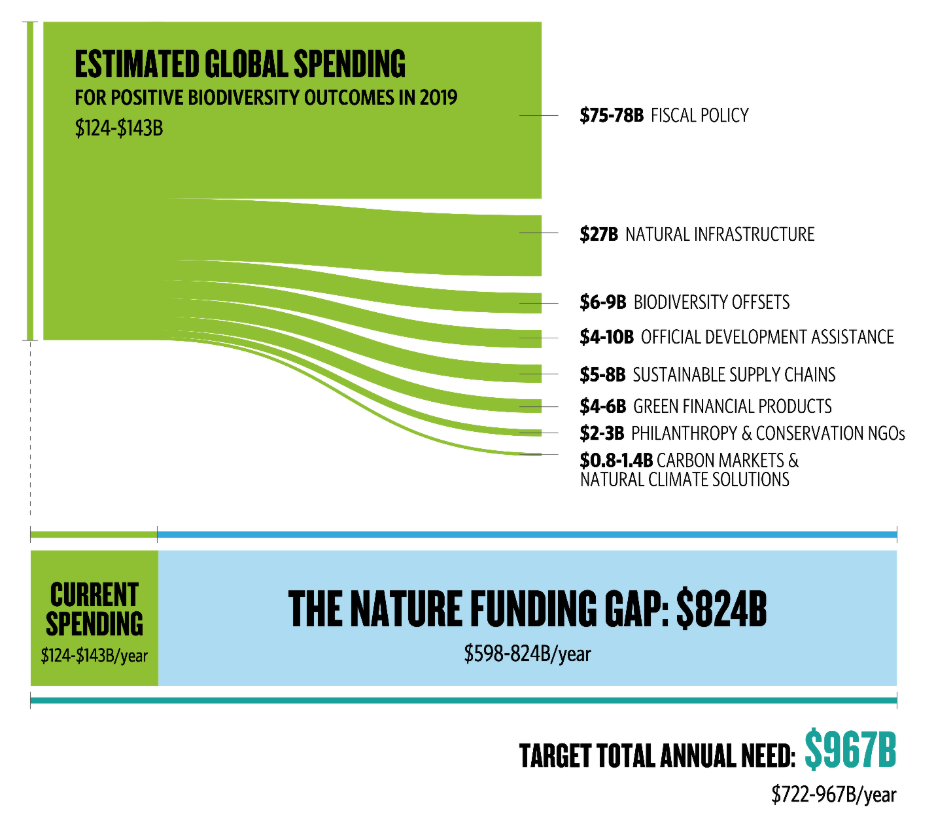
Source: The Nature Conservancy 2021
Public Sector Sources
The public sector provides funding towards land protection and restoration through several different mechanisms at multinational, national, and sub-national levels of government.
Bilateral Donors (National Government Aid): Bilateral donations involve two parties: an aid or development agency of a national government and the recipient country or sub-national entity (e.g., NGOs). Active bilateral donors include GIZ (Germany), ODA (Japan), FCDO (UK), NORAD (Norway), and SIDA (Sweden). USAID in the US was previously also an important global bilateral donor but in 2025 was disbanded.
The OECD Data Explorer is an interactive tool allowing users to search and download data on official development assistance by thematic area, such as aid targeted for biodiversity or desertification:

Multilateral Development Banks (MDBs)
MDBs are international financial institutions that are established by a group of countries to provide funding, finance, and technical assistance for economic and other forms of development in lower income, developing countries. MDBs are governed jointly by member countries, who provide funding for the Bank’s operations and investment. Land conservation and restoration are often areas of investment by these Bank’s given the importance of these interventions to overall social and economic development. Examples of MDBs include the World Bank, the African Development Bank, the Asian Development Bank, and the Inter-American Development Bank. These institutions frequently co-finance investments with other partners such as national governments and NGOs.
The World Bank Group is an MDB comprised of the International Bank for Reconstruction and Development (IBRD) and the International Development Association (IDA) that offers two types of loans reflecting the economic conditions and capacities of its borrowers. The IBRD offers market rate or near-market rate loans while the IDA offers low or zero-interest loans and grants for the poorest countries. The repayment terms (years to repay) and other terms of the loans are likewise set depending on the borrowing country’s capacity.
The World Bank has had several successes in public financing of integrated landscape management at scale, including the China Loess Plateau, Ethiopian highlands, and other projects highlighted in the Global Good Practice chapter of this e-book. The WBG Corporate Scorecard results indicator highlights the importance the group has on healthy landscapes and seascapes. However, the current work will need to be dramatically scaled up in the coming decade to meet the scale of the global challenge of land degradation, leveraging emerging global good practices and new technologies and financial instruments. Part of this scaling-up will be internal, with more funding and finance directed towards ILM, but MDBs also have the capacity to move more private investment into this space.
MDBs also have an important role to play in mobilizing finance from the private sector, particularly in de-risking investments. De-risking mechanisms MDBs can deploy include partial risk guarantees (e.g., for political risk), credit enhancement (increasing the credit worthiness of a bond or loan through bank guarantees to cover debt service payments or through letters of credit whereby a bank promises to repay the loan if the borrower defaults), and providing first-loss capital (e.g., capital that can absorb initial losses from a project so that other investors suffer fewer losses). Other ways in which MDBs can mobilize private finance is through providing technical assistance and capacity building to projects and borrowers; investing with private investors in blended finance structures; developing, testing, and refining innovative financial instruments such as impact bonds; and promoting regulatory and policy reforms. The video below discusses how MDBs can catalyze the private sector for development work.
Multilateral Environmental Funds (MELs)
MELs are financial mechanisms established by countries to meet global environmental goals. MELs provide resources to projects and programs through grants, concessional (low interest) loans, technical assistance, and capacity building. These mechanisms are governed by a group of donors and recipient countries and often target cross-border environmental issues. Examples of MELs include the Global Environment Facility (GEF) , housed at the World Bank and the Green Climate Fund (GCF). GEF8 (2022-2026) prioritizes integrated programs that work towards UNCCD goals, including investment in land restoration and sustainable land management, through a focal area on land degradation. For example, the GEF provides funding for countries to meet land degradation neutrality (LDN) targets . Over the last 20 years, the GEF has provided $5.2 billion to 674 land degradation projects and programs in 144 countries. These projects have leveraged an additional $35.4 billion in co-financing.
A Land Degradation Neutrality Fund is being established by the UNCCD as an impact investing fund that will blend public, private and philanthropic sources of capital together to support land restoration and sustainable land management activities of the private sector. This fund will invest in revenue-generating activities undertaken by the private sector that provide a financial return while creating environmental and socioeconomic benefits through sustainable forestry, sustainable agriculture, and sustainable livestock management, among other activities. The video below discusses the Land Degradation Neutrality Fund.
International Organizations
Food and Agriculture Organization: The Food and Agriculture Organization (FAO) plays a central role in addressing land degradation. It supports countries implementing sustainable land management (SLM) practices, restoring degraded ecosystems, and strengthening land governance. FAO's work is aligned with global goals such as SDG 15.3 (Land Degradation Neutrality) and the UNCCD (United Nations Convention to Combat Desertification).
The Global Soil Partnership: One of FAO’s flagship initiatives, the Global Soil Partnership , promotes sustainable soil management to prevent degradation and enhance productivity. Through the GSP, FAO supports national soil information systems, soil laboratories, and policy development, helping countries assess and manage soil health to combat erosion, salinization, and nutrient depletion.
The FAO-GEF Program on Sustainable Land Management: The FAO, in collaboration with the Global Environment Facility (GEF ), has led several projects under the FAO-GEF partnership, particularly the Sustainable Land Management (SLM) in Practice program. These projects help integrate SLM into national development plans and scale up practices that restore degraded landscapes, especially in sub-Saharan Africa, Latin America, and Central Asia.
The Dryland Sustainable Landscapes (DSL) Impact Program: FAO leads the DSL Impact Program , working with the GEF (under the Global Environmental Benefits (GEBs) )on a large-scale initiative working across 11 countries in Africa and Asia. The program aims to combat desertification, improve resilience, and restore productivity in drylands through community-based and ecosystem-based approaches to land use.
REDD+ and Land Degradation: The FAO also supports countries implementing REDD+ (Reducing Emissions from Deforestation and Forest Degradation) strategies through their Nationally Determined Contributions, which indirectly combat land degradation by preserving forest ecosystems. Through the UN-REDD Programme, FAO helps build technical capacity, develop forest monitoring systems, and improve land-use governance in forested regions.
National and sub-national public sources
National, state, and local (municipal) governments also fund land restoration and conservation within their own borders through budget allocations to land protection and restoration, which can be deployed across landscapes through grants made by government agencies of environment, agriculture, and even transportation; specialized funds for environmental restoration and conservation or climate (e.g., the U.S. Land and Water Conservation Fund, funded from revenue from offshore oil and gas leases or the Brazil Amazon Fund , a REDD+ mechanism created to raise donations for non-reimbursable investments in deforestation); and state and municipal budgets for conservation and restoration.
Private Sector Sources
Private sector actors play a central role in land use systems, both through their direct environmental impact and their influence over supply chains, capital flows, and operational practices. Businesses across sectors, including agriculture, forestry, mining, infrastructure, manufacturing, and finance, are among the largest users of land, water, and soil resources. Their activities shape patterns of land conversion, input use, and resource extraction, often contributing to forms of land degradation such as monoculture expansion, deforestation, and intensive surface disturbance. At the same time, these actors control assets, technologies, and logistical infrastructure that could support more sustainable land use. Their reach across industries and jurisdictions positions them not only as contributors to current land dynamics but also as key agents of restoration, capable of driving systemic change in how land is managed and rehabilitated.
Exposure to land degradation is becoming a growing operational and financial concern across multiple industries. Unsustainable land use practices, including intensive farming, deforestation, chemical runoff, and extractive operations, have compromised the regenerative capacity of soils and ecosystems. Agriculture accounts for approximately 40 percent of global land degradation, with forestry and mining contributing 30 and 15 percent , respectively. These impacts can reduce yields, destabilize supply chains, and introduce variability into commodity markets in exposed sectors that rely on stable land inputs. As climate risks, biodiversity loss, and ecosystem decline intersect with these challenges, land degradation increasingly affects the availability of land-based inputs, the reliability of ecosystem services, and long-term business continuity. Companies are starting to recognize the importance of healthy soils, watersheds, and natural systems in maintaining long-term productivity and minimizing exposure to disruptions.
Embedding sustainable land management into core business strategies offers long-term benefits for investment performance and ecological resilience. Natural Climate Solutions (NCS) and Ecological Land Restoration (ELR) have proven effective in restoring ecosystems, enhancing carbon storage, improving water regulation, and supporting agricultural productivity. However, the financing gap for large-scale restoration exceeds the capacity of public resources alone. Land-intensive sectors, including agriculture, forestry, mining, and infrastructure, shape land use through capital allocation, sourcing models, and operational decisions, thereby positioning them to influence restoration outcomes directly. Achieving global objectives, such as restoring 1.5 billion hectares by 2030, will require expanded private sector engagement to scale these solutions and integrate land restoration into business planning, risk management, and investment portfolios.
Beyond financial resources, the private sector brings implementation capacity, logistical reach, and cross-sectoral influence. Many firms operate across multiple jurisdictions and value chains, creating pathways for replicating improved land management practices. Their existing infrastructure, including procurement systems, logistics networks, and contract frameworks, can facilitate the integration of regenerative practices into supply chains and service delivery. Furthermore, tools such as corporate disclosure requirements, environmental accounting systems, and voluntary sustainability standards have enabled companies to track land-related impacts and align operations with broader environmental performance benchmarks. These mechanisms can facilitate consistency and comparability across sectors, contributing to more transparent and accountable land stewardship practices.
Despite increasing awareness, several structural barriers continue to limit the scale and effectiveness of private sector engagement in land restoration. These include regulatory uncertainty, short-term investment horizons, insufficient metrics for evaluating land performance, and limited access to reliable geospatial and biophysical data. Addressing these gaps requires coordinated action from governments, multilateral institutions, and technical platforms to establish enabling policy environments, standardize performance indicators, and reduce investment risks. Developing clear accountability mechanisms and aligning incentives can support the integration of sustainable land management into business models. Overcoming these challenges will be essential for establishing durable public-private cooperation in restoring degraded landscapes and maintaining the productivity of land-based systems.
Bond Instruments
Bonds are a promise from a borrower to pay back a loan with some amount of interest. These instruments have evolved considerably to encompass varying levels of interest payments, different borrowers and lenders, and outcome-based considerations. Green bonds are a subset of typical bond instruments that have some kind of environmental purpose that the proceeds of the bond (the borrowed money) are applied to. The video below provides more information on green bonds.
There are multiple types of green bonds, including climate bonds (focus on efforts to address mitigation, adaptation and resilience to climate change and climate impacts), blue bonds (focus on ocean-related projects), and sustainability bonds. Investors are primary fixed-income investors – institutions or individuals who purchase debt securities like bonds that provide a predictable income stream over time and return of the principal at the end of the bond’s term. Green bond investors include major asset investors, pension funds, and high net worth individuals, especially people interested in using family wealth to support efforts to address climate change and other environmental efforts. Green bonds have grown into a major asset class, with over $4.4 trillion in cumulative issuance of green, social, sustainability and sustainability-linked debt by end of 2023. The videos below provide more information on green bonds.
Yet until recently, only a small share of green bonds targeted land-based projects. This is starting to change. In 2018, the Tropical Landscapes Finance Facility in Indonesia issued a landmark $95 million “sustainable landscape bond” – the first of its kind – to finance a sustainable rubber plantation on degraded land while restoring surrounding forests. This 15-year bond, arranged with global banks and backed by a public-private coalition, not only supports a business venture (climate-friendly rubber production) but also funds the rehabilitation of vital wildlife habitats and community programs. The deal pioneered a model in which bond investors earn returns from sustainable agriculture, and in return the project achieves measurable conservation outcomes – aligning financial incentives with land restoration. The video below discusses the finance facility.
After the successful establishment of the Sustainable Landscape Bond in Indonesia, more issuers from emerging markets to multinational corporations have floated green bonds and nature performance bonds to fund activities like reforestation, sustainable forestry, and regenerative agriculture. Green bond issuance reached nearly $588 billion in 2023 alone a 15% increase from the prior year, reflecting the rapid rise in investor appetite for sustainable land-use investments as part of the broader climate finance boom.
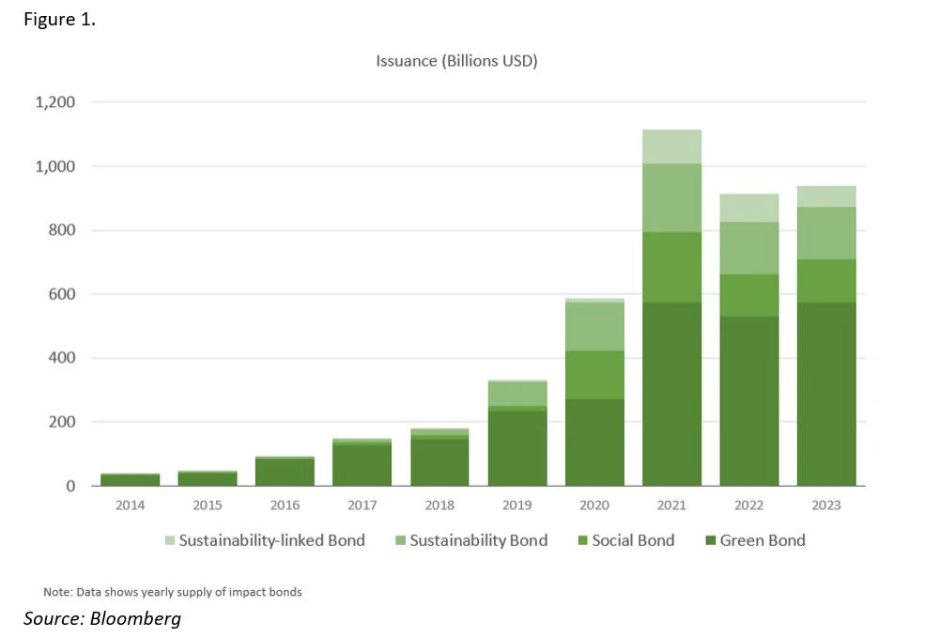
Source: Bloomberg
Estimated Impact Bond Issuance (2021-2023)
Values shown as percentage of total annual issuance
Performance Based Instruments
Another powerful tool is the sustainability-linked loan (SLL), which rewards corporate borrowers for meeting environmental performance targets. Unlike green bonds (where proceeds are earmarked for green projects), SLLs tie the loan’s interest rate to the borrower’s achievement of sustainability goals – for example, hectares of land restored or conserved. This mechanism directly incentivizes companies to improve land stewardship to get better loan terms. A notable example is an SLL issued by Crédit Agricole to Veracel, a Brazilian forestry company, which links interest rates to verifiable targets for expanding reforested areas, biodiversity conservation, and ecosystem health on the company’s landholdings. If Veracel meets its reforestation and conservation goals, it enjoys a lower cost of capital; if it falls short, the loan becomes more expensive. Such structures are increasingly common – agribusinesses, timber firms, and even commodity traders have secured SLLs that hinge on metrics like forest cover or soil carbon improvement. By hardwiring positive environmental outcomes into financial performance, these loans motivate companies to actively restore landscapes as a matter of business success.
Corporate Social Responsibility

Img src: https://nature4climate.org/nature-finance/
Public-private and civil society partnerships are central to scaling up land restoration efforts, with corporate philanthropy often seeding and supporting these initiatives. Many companies have established dedicated funds and programs to finance ecosystem restoration beyond their immediate supply chain needs. These corporate investments – sometimes framed as “giving back” to nature – enable reforestation, soil rehabilitation, and habitat conservation projects in critical landscapes worldwide. For example, Unilever launched a €1 billion Climate & Nature Fund to support on-the-ground climate and restoration projects over 2020–2030unilever.com. One flagship effort from this fund is the Dove brand’s partnership with conservation groups via the Rimba Collective to protect and restore 123,000 acres of rainforest in Southeast Asia (an area eight times the size of Manhattan) while improving local livelihoodsunilever.comunilever.com. By committing substantial, patient capital, such corporate philanthropy vehicles help ensure restoration projects are not one-off events but sustained over many years, allowing forests and ecosystems the time to recover and thrive.
Strategic multi-stakeholder partnerships amplify the impact and longevity of these corporate initiatives. Companies often team up with international NGOs, local community organizations, and government agencies to design and implement restoration programs. This collaborative model leverages the strengths of each partner – corporate funding and technical know-how, NGO expertise in conservation science, government support in policy and land tenure, and local communities’ on-ground knowledge and stewardship. Nestlé’s Global Reforestation Program, for instance, works closely with farming communities and expert NGOs as it rolls out projects to plant 200 million trees in critical sourcing landscapes by 2030. Such collaboration not only plants trees but also trains farmers in agroforestry, restores watersheds, and builds community ownership so that restored areas are safeguarded in the long term. Patagonia provides another notable example: the outdoor apparel company has hardwired conservation philanthropy into its business model – donating 1% of sales to environmental causes – which has amounted to over $140 million since 1985 for hundreds of grassroots projects to preserve and restore natural habitats. By funding local land trusts, river restoration groups, indigenous land rights initiatives and more, Patagonia and its peers (through coalitions like 1% for the Planet) help scale up countless community-led restoration efforts across the globe.
Crucially, these partnerships ensure landscape stewardship beyond the project timeframe. Companies like Unilever and Nestlé increasingly tie community development and alternative livelihoods into their restoration projects, aiming to make restored landscapes economically self-sustaining. In Indonesia, for example, corporate-NGO alliances in “production-protection” initiatives combine support for sustainable agriculture (such as shade-grown cocoa or rubber) with the conservation of adjacent natural forests. This integrated approach helps communities prosper from the land in sustainable ways, securing buy-in for keeping forests standing. Long-term NGO engagement provides monitoring and capacity building so that restored forests are managed well into the future. Meanwhile, government partners can align these projects with national conservation strategies (such as REDD+ programs) and provide legal protection for regenerated areas. Indeed, under the UN’s REDD+ framework (Reducing Emissions from Deforestation and Forest Degradation), private companies are recognized as key stakeholders whose engagement “must be broadened to slow, halt and reverse forest loss” – a call that is being answered through the kind of cross-sector collaborations exemplified by the Global Environment Facility’s Livable Landscapes programs. By pooling resources and expertise, and by grounding projects in local stakeholder needs, corporate-supported partnerships greatly improve the odds that restored lands remain healthy and productive well beyond the initial investment.
Innovative Financial Structures
Innovative financial mechanisms are transforming the landscape of conservation finance by mobilizing private capital for land protection and restoration at scale. As public budgets remain constrained and environmental degradation intensifies, new models are emerging that align ecological outcomes with investor incentives. This section explores a diverse array of instruments, including green bonds, sustainability-linked loans, blended finance, tokenization, eco-compensation, and parametric insurance, that are channeling private investment into nature-based solutions. These mechanisms are not only expanding the pool of available capital but also reshaping how risks are managed, returns are structured, and environmental impacts are measured. Through real-world examples and case studies, this section highlights how the private sector is increasingly participating in, and in some cases leading, efforts to restore degraded landscapes, regenerate ecosystems, and strengthen climate resilience through finance-driven innovation.
Green Bonds and Sustainability-Linked Loans
Green finance instruments are increasingly being adapted to support large-scale investment in land protection and restoration. Green bonds, sustainability-linked loans, and other innovative debt instruments are channeling capital toward sustainable land-use activities (Figure 4). As of the end of 2023, over $4.4 trillion in labeled green, social, sustainability, and sustainability-linked debt had been issued globally , though only a small fraction had historically targeted land-based projects. This is beginning to shift. In 2018, Indonesia’s Tropical Landscapes Finance Facility issued a landmark $95 million “sustainable landscape bond” to fund climate-resilient rubber production on degraded land while restoring adjacent forests. The 15-year bond, arranged through a public-private partnership, aligned investor returns with measurable conservation outcomes, including habitat rehabilitation and local development programs. Since then, green and nature performance bonds have been issued for a range of land-related purposes, including reforestation, sustainable forestry, and regenerative agriculture. In 2023 alone, green bond issuance totaled $588 billion, marking a 15 percent year-over-year increase and underscoring the growing appetite for nature-based investment within global climate finance.
Figure 4. Aligned green debt scorecard
Source: https://www.climatebonds.net/2024/05/green-other-labelled-debt-hit-870bn-aligned-debt-2023
Sustainability-linked loans are creating direct financial incentives for corporate land restoration. Unlike green bonds, which earmark proceeds for specific projects, sustainability-linked loans (SLLs) adjust borrowing costs based on the borrower’s achievement of environmental performance targets. These targets can include metrics such as the number of hectares restored, improvements in biodiversity, or gains in soil carbon. A prominent example is the SLL issued by Crédit Agricole to Veracel, a Brazilian forestry company, where interest rates are tied to verifiable progress in reforestation and conservation efforts on the company’s landholdings. If performance goals are met, Veracel benefits from lower borrowing costs; if not, penalties apply. This model is gaining traction among agribusinesses, timber firms, and commodity traders, who are leveraging SLLs to embed environmental outcomes into their capital structures. By linking access to favorable financing terms with land stewardship, these instruments reinforce the business case for landscape restoration.
Blended Finance Models and Private Equity for Land Restoration
Blended finance models are unlocking private capital for land restoration by reducing risk and enhancing returns. These approaches combine public, philanthropic, and private funding to catalyze investment in projects that regenerate land while generating financial value. The Land Degradation Neutrality Fund (LDN Fund), co-sponsored by the UN Convention to Combat Desertification, is a prominent example. It has raised over $200 million from a diverse investor base, including development finance institutions and pension funds, and has deployed capital across 13 sustainable land management projects in Latin America, Africa, and Asia . These ventures span agroforestry, regenerative agriculture, and conservation-linked enterprises in sectors such as coffee, cocoa, and timber. Blended finance structures typically feature public or philanthropic investors taking first-loss positions or accepting lower returns, thereby de-risking projects for commercial investors. In parallel, specialized private equity funds, such as Mirova’s Natural Capital platform, are designing biodiversity-focused investment vehicles in partnership with NGOs. These funds rely on revenue streams from carbon credits, payments for ecosystem services, and biodiversity offset markets. One emerging model is habitat banking, where land is restored to generate biodiversity credits for sale to developers, attracting growing interest from private equity. These financial innovations are monetizing the value of ecological restoration, converting natural capital improvements into investable cash flows that appeal to mainstream investors.
Development finance institutions are essential in guiding private capital toward biodiversity outcomes. Development finance institutions (DFIs) play a catalytic role in enabling private capital to flow toward land restoration and biodiversity outcomes. The International Finance Corporation (IFC), as the private sector arm of the World Bank Group, has emerged as a leading actor in this space. Its biodiversity finance strategy reflects growing recognition that nature loss poses material financial risks, and that biodiversity must be integrated into mainstream investment decision-making. IFC has aligned its work with broader multilateral commitments, including the Joint Statement on Nature, People, and Planet, and the MDB Common Principles for Tracking Nature-Positive Finance . It applies the World Bank Group’s Nature Finance Tracking Methodology across its operations.
IFC has established a clear framework to help investors align with global biodiversity goals. In 2022, IFC published the Biodiversity Finance Reference Guide to support market alignment with global biodiversity goals. The guide provides a structured taxonomy of eligible investment categories, including ecosystem restoration, sustainable agriculture, invasive species management, and conservation finance, designed to help investors identify nature-positive activities across a broad spectrum of economic sectors. These categories are mapped to the Kunming-Montreal Global Biodiversity Framework and aligned with the Green Bond Principles and Green Loan Principles to facilitate compatibility with existing green finance standards. A revised edition of the guide was released in May 2023 to reflect market feedback and evolving investment practices.
The Guide responds to increasing investor demand, as well as to persistent uncertainty about what constitutes biodiversity finance. Despite accelerating investor interest in nature-positive investment, the absence of clear, widely accepted benchmarks has been a barrier to market participation. IFC’s guidance addresses this gap by articulating not only what constitutes biodiversity finance, but also how financial institutions can develop, label, and report biodiversity-linked portfolios. The framework emphasizes ecosystem integrity, long-term sustainability, and safeguards against greenwashing, offering both investors and issuers a practical, principles-based approach to biodiversity finance.
The IFC’s leadership reinforces the critical role of DFIs in shaping standards and scaling nature-positive finance. As the market for biodiversity finance matures, IFC’s guidance is expected to evolve alongside new tools, metrics, and reporting frameworks. Its forward-looking approach demonstrates how DFIs can play a market-making role, translating global policy goals into investable categories that enable capital markets to respond to the dual crises of climate change and biodiversity loss. In doing so, IFC provides an essential bridge between public mandates and private incentives, helping to ensure that land restoration and ecosystem protection are integrated into the broader framework of sustainable finance.
Tokenization of Natural Assets and Digital Finance Innovation
Tokenization of natural assets represents a frontier innovation in conservation finance, leveraging blockchain technology to create digital representations of ecological value such as forests, wetlands, or carbon sequestration capacity. This approach transforms intangible ecosystem services into tradable digital tokens, enabling fractional ownership and new investment pathways. By democratizing access to conservation funding, tokenization enables individuals and institutions to support landscape restoration projects that were previously accessible only to large investors . Platforms like those explored by CryptoAltruists demonstrate how tokenized natural capital assets can incentivize regeneration by linking financial returns to verifiable ecological outcomes, such as reforestation or biodiversity recovery. Crucially, blockchain's inherent transparency provides immutable records of transactions and impact, reducing risks of greenwashing and ensuring accountability in conservation financing.
Implementing tokenization requires navigating complex regulatory, technical, and ethical challenges to avoid pitfalls associated with commodification and ensure equitable outcomes. Regulatory frameworks for digital assets remain underdeveloped globally, creating uncertainty around legal recognition and consumer protections for tokenized natural assets. From an ethical perspective, private sector involvement in tokenization must carefully address concerns about reducing ecosystems to tradable financial instruments, which risks undermining intrinsic ecological values and marginalizing the rights of indigenous and local communities to stewardship . Companies leading tokenization initiatives are increasingly recognizing the importance of embedding social safeguards and participatory governance into project design. This includes co-designing tokenization frameworks with affected communities to ensure fair benefit-sharing, respect for land tenure, and recognition of traditional ecological knowledge.
Technically, robust verification and transparency systems are essential for private sector actors to validate ecological claims and prevent fraud, which is critical for maintaining market credibility. Companies are investing in advanced monitoring technologies, such as satellite imagery, AI-driven audits, and blockchain-based tracking, to provide immutable, real-time evidence of outcomes, including carbon sequestration, biodiversity gains, and habitat restoration. These verification mechanisms foster trust among investors, regulators, and consumers by ensuring that tokenized assets are linked to genuine environmental benefits. Furthermore, successful private sector models integrate clear ethical boundaries that prohibit speculative trading on critical ecosystems, focusing instead on long-term stewardship and impact-driven investment. By addressing regulatory, ethical, and technical challenges holistically, the private sector can unlock the full potential of tokenization as a scalable tool for conservation finance and landscape restoration .
When integrated with inclusive governance and impact-focused standards, tokenization can catalyze scalable private-sector investment in landscape regeneration. Collaborative frameworks are emerging that connect tokenization initiatives with established global conservation goals such as the UN Sustainable Development Goals (SDGs), the Convention on Biological Diversity (CBD), and the UN Decade on Ecosystem Restoration. These frameworks create market confidence by developing certification protocols that rigorously verify biodiversity conservation and carbon sequestration outcomes, providing investors with credible assurances that their capital supports genuine environmental benefits. Forward-looking initiatives embed safeguards against pure financialization, tying token value to regenerative outcomes rather than speculative trading, and using smart contracts to automate community benefit distributions. Smart contracts automate the distribution of benefits to local communities and stakeholders, enhancing transparency and reducing administrative burdens. This automation enables real-time tracking of restoration progress and the equitable sharing of revenues generated from ecosystem services, thereby reinforcing social equity and community stewardship.
This evolution positions tokenization not as a standalone solution but as a complementary tool within a diversified conservation finance landscape, capable of unlocking patient capital for large-scale restoration while maintaining ecological integrity and social equity through transparent, multi-stakeholder governance. By integrating tokenization with traditional financing mechanisms such as grants, impact investing, and carbon markets, private sector actors can leverage a broader range of capital sources and risk profiles. Multi-stakeholder governance structures, including governments, indigenous peoples, NGOs, and investors, ensure that restoration projects are co-designed and managed to balance economic viability with ecological and social outcomes . This holistic approach enhances the scalability, resilience, and legitimacy of landscape restoration efforts, making tokenization a powerful enabler of sustainable development.
Eco-Compensation Mechanisms and Public-Private Integration
Public-sector eco-compensation systems are emerging as foundational tools for mobilizing capital toward land restoration. These mechanisms typically involve targeted fiscal transfers, performance-based subsidies, and interjurisdictional payments that assign economic value to ecosystem services such as water purification, erosion control, and carbon storage. In China, where these models have been piloted and scaled nationwide, eco-compensation frameworks are now used to finance watershed protection, forest regeneration, and biodiversity corridors across hundreds of municipalities (blogs.worldbank.org). By establishing predictable financial flows tied to environmental outcomes, these systems empower subnational actors and project developers to design long-term ecological initiatives with stable revenue streams. Where well-implemented, eco-compensation converts ecological externalities into investable service contracts, creating the foundation for integration with green finance, carbon markets, and biodiversity credit schemes.
When embedded within legal mandates and backed by long-term budget commitments, eco-compensation programs can de-risk private investment in restoration. Institutional design features such as multi-year contracts, standardized ecological indicators, and third-party verification systems help build investor confidence. For example, payment schemes that reward upstream landholders for protecting forests or wetlands can blend public financing with private capital through instruments like sustainability-linked loans or habitat banking. In some provinces, local governments have integrated eco-compensation into broader development plans, pairing restoration with ecotourism, agroecology, and water infrastructure to create diversified revenue models. China’s evolving regulatory framework, anchored by the draft National Eco-Compensation Regulation, formalizes compensation agreements between upstream and downstream jurisdictions, enabling co-financing with utilities, infrastructure developers, and commercial partners (adb.org).
The integration of market-based instruments is expanding the scalability and financial viability of eco-compensation. Environmental taxes, ecological asset registries, and carbon markets are being embedded into these programs to diversify funding streams and align incentives. Leading models have introduced biodiversity offset markets, ecological credit platforms, and digital verification systems that assign tradable value to ecosystem services. In China, ecological product accounting and digital asset registries are being piloted to monetize services such as carbon sequestration and habitat conservation. Provinces like Zhejiang and Fujian have used these platforms to support conservation finance, biodiversity trading, and forest carbon transactions, providing verified restoration outcomes that align with both compliance requirements and voluntary sustainability commitments.
Parametric Insurance for Land Restoration and Resilience
Parametric insurance is emerging as a strategic instrument for mobilizing private capital in land restoration by offering rapid, data-driven payouts that reduce risk exposure and enable timely ecological interventions. Unlike traditional indemnity insurance, which relies on damage assessments, parametric models disburse funds automatically when predefined environmental thresholds, such as rainfall anomalies, drought indices, or fire severity metrics, are met. This structure minimizes delays and administrative burdens, allowing restoration actors to initiate response activities at critical moments . For private sector stakeholders, including agribusinesses, forestry companies, and tourism operators, such mechanisms mitigate losses linked to climate-related shocks, while ensuring business continuity and ecosystem functionality.
The growing deployment of parametric insurance is accelerating the integration of advanced environmental monitoring technologies into restoration finance. Companies are collaborating with geospatial firms, Earth observation platforms, and AI analytics providers to generate high-frequency, spatially resolved environmental data that informs insurance triggers and validates outcomes. These technological partnerships enhance transparency and reduce information asymmetries, enabling more accurate pricing of ecosystem risk and increasing investor confidence in the viability of restoration-linked investments. By embedding objective, real-time indicators into financial structures, parametric insurance facilitates adaptive landscape management and supports long-term ecological resilience. Private sector leadership in parametric insurance is also strengthening multi-stakeholder coordination around landscape restoration. In several emerging models, insurance payouts are structured to directly finance activities co-designed with local communities and subnational authorities, such as seedling distribution, erosion control, and fire buffer maintenance. These collaborative frameworks help ensure that financial flows are aligned with ecological priorities and social inclusion goals, reinforcing both environmental performance and local buy-in.
Scaling parametric insurance for land restoration requires addressing critical challenges in trigger design, data equity, and institutional readiness. Ecosystem degradation often results from cumulative stressors that are not easily captured by single-parameter indices. As a result, insurance instruments must evolve to incorporate composite ecological indicators that better reflect system dynamics and risk thresholds. Additionally, access to high-resolution environmental data and technical expertise remains uneven, particularly in low-capacity regions, posing a barrier to smaller restoration ventures and community-based projects. Addressing these disparities will require the private sector to support capacity-building partnerships, contribute to the standardization of ecological metrics, and advocate for regulatory environments that enable innovation while safeguarding equity.
When deployed responsibly, parametric insurance complements traditional financing tools by offering scalable, risk-responsive mechanisms that incentivize and protect restoration investments. Its integration into broader blended finance and resilience strategies can unlock new capital flows, improve project bankability, and reduce fiscal pressures on public institutions, contributing meaningfully to global efforts to restore degraded landscapes and enhance climate adaptation.
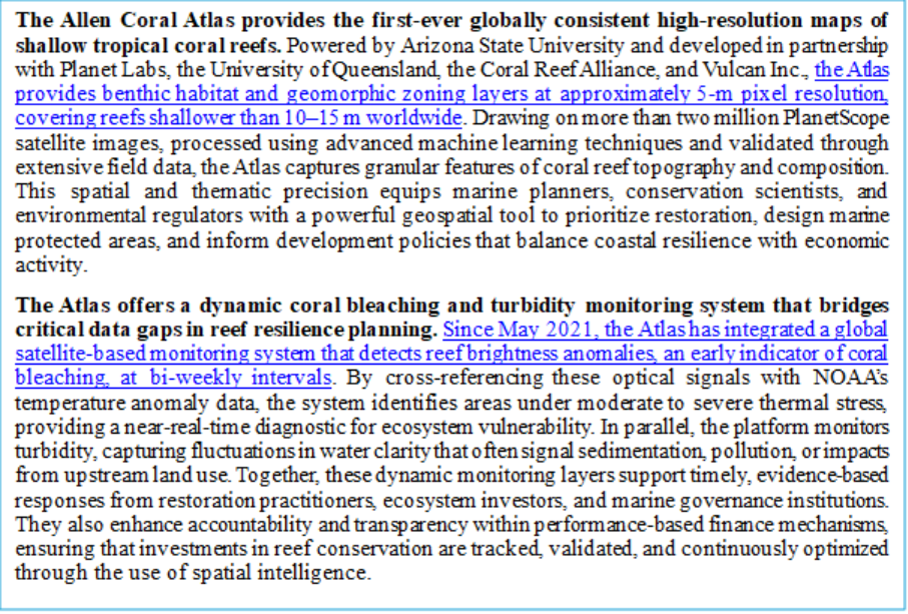
Eco-compensation also supports the development of investable restoration pipelines by embedding ecological priorities into national planning systems. Where ecosystem services are systematically mapped and valued, public authorities can identify high-impact zones and direct blended finance accordingly. Technical tools, such as restoration playbooks, standardized compensation rules, and digital MRV (monitoring, reporting, and verification) platforms, have enhanced project bankability and investor readiness. In China, eco-compensation is closely integrated into national spatial planning and ecological redline policies, helping prioritize restoration areas and allocate public resources efficiently. By combining geospatial mapping with satellite-based performance tracking, Chinese agencies have reduced due diligence barriers and improved transparency, offering a model for other countries seeking to scale restoration through hybrid public-private approaches.
Market Trends and the Road to Scaling Private Investment
Despite growing interest, private capital remains underutilized in financing land restoration. Currently, private finance accounts for only 17 to 18 percent of global investment in nature-based solutions, with public sources still bearing the majority of the burden . Within climate finance more broadly, the imbalance is even starker: less than 1 percent of private climate finance is directed to the agriculture, forestry, and land-use (AFOLU) sectors, compared to 85 percent flowing to clean energy . This disparity highlights a significant opportunity; mobilizing even a modest share of the global capital market toward land could dramatically scale up restoration outcomes. Encouragingly, momentum is building. Between 2018 and 2022, private investment in nature increased more than tenfold, from $9.4 billion to over $102 billion , driven by the introduction of new blended finance vehicles, voluntary carbon markets, and sustainable supply chain commitments. Projections by UNEP and partners indicate that with the right policy frameworks and market signals, private capital flows to nature and biodiversity could reach $1.4 trillion annually by 2030 . Unlocking this potential will depend on continued financial innovation, the development of de-risking tools, and enhanced corporate disclosure and accountability for nature-related performance.
Emerging global frameworks are clarifying how nature-related risks and opportunities translate into financial decision-making. The Taskforce on Nature-related Financial Disclosures (TNFD) has introduced a standardized framework for companies and financial institutions to assess and disclose their dependencies and impacts on nature. Building on the precedent set by the Task Force on Climate-related Financial Disclosures (TCFD), the TNFD aims to integrate biodiversity and ecosystem health into corporate balance sheets, enabling more informed capital allocation toward nature-positive investments. In parallel, results-based financing mechanisms such as REDD+ are gaining traction by offering verified payments for forest conservation outcomes. These schemes effectively monetize carbon sequestration services, allowing companies to invest in or purchase credits from REDD+ projects as part of their net-zero strategies. Firms across sectors are already engaging in these markets, supporting forest protection efforts in countries such as Brazil and Kenya. As disclosure frameworks mature and voluntary carbon markets scale, they are expected to enhance transparency, de-risk investment, and reinforce the business case for allocating private capital toward land restoration as both a compliance and opportunity-driven strategy.
Financing Enabled by Nature Based Solutions
Nature-based solutions – nature's technology – is rapidly gaining acceptance globally as an investment paradigm that combines traditional grey infrastructure with more green options and has critical benefits to and opportunities for addressing land degradation.A recent World Bank report underscores that nature-based solutions are gaining traction in sub-Saharan Africa specifically, where between 2012 and 2023 there were 300 new nature-based resilience projects representing $21 billion in funding.
Source: World Bank
Nature-based solutions seek to preserve the ecosystem services nature provides by protecting and restoring natural systems. Well-functioning ecosystems provide a host of critical ecosystem services that support the natural world and human society. These services include provisioning, regulation, supporting, and cultural services. According to the IUCN , nature-based solutions are “actions to protect, sustainably manage, and restore natural or modified ecosystems that address societal challenges effectively and adaptively, simultaneously providing human well-being and biodiversity benefits.”Vegetation and soils, including forests, provide critical provisioning and regulating ecosystem services. Vegetation, including forests and trees, hold soil together, reducing erosion and retaining soil fertility (regulating service) while also purifying water (provisioning service). Vegetation and soils also absorb and hold water, moderating streamflow and reducing inland flooding, coastal erosion, and sea-level rise (regulating service). The video below is a webinar on investing in nature based solutions.
NBS can be implemented at various scales and for multiple sectors. NBS can be implemented at the landscape level, where whole watersheds or ecosystems are managed, protected, and/or restored to positively impact ecosystem services that deliver benefits to agricultural areas, hydropower facilities, waterways, cities, and coastal areas. At the other end of the spectrum, NBS can be implemented at the local level, either as green infrastructure for stormwater mitigation in an urban area, or green infrastructure installed above a road in hilly terrain to prevent landslides originating from higher elevations. Appropriate NBS mitigation measures may be scale dependent. To understand priority areas for NBS investment, development teams should conduct landscape-level assessment to identify areas external to the immediate project site that may significantly impact the project through landscape-scale natural processes (e.g., erosion and sedimentation). For example, on a single hillslope, NBS may not be effective in isolation, but could be implemented at the hillslope with other risk reduction measures, as well as in the surrounding areas that impact the hillslope.
The Bank has explored the use of NBS in a variety of sectors, including flood and coastal erosion risk mitigation. The Bank’s Nature-Based Solutions Program , started in 2017, seeks to collate information on NBS used in Bank projects, provide guidance on integrating NBS into future projects, and to mainstream the use of NBS in future projects in DRM and water management. The program has thus far focused on coastal flooding and erosion, river flooding, and urban stormwater flooding. A growing number of Bank projects incorporate nature-based solutions for disaster risk reduction, such as forest-based landslide risk management in Sri Lanka , coastal flooding and erosion in Vietnam , and urban and river flooding in Senegal. A synopsis of the Bank’s NBS program is available here. The video below discusses the Bank’s approach to leveraging nature-based solutions for resilience.
Payments for Ecosystem Services
Source: FAO 2021
Payment for Ecosystem Services (PES) schemes create incentive-based mechanisms that link beneficiaries of ecosystem functions with those responsible for maintaining them. Under these arrangements, individuals or institutions that derive value from ecosystem services, such as water purification, carbon sequestration, or biodiversity, compensate land stewards or communities who manage landscapes to sustain those benefits (documents.worldbank.org). PES models vary in structure: some are market-based, involving voluntary transactions between private actors for a clearly defined service, while others are implemented through public policy, with end users (e.g., taxpayers or utility customers) indirectly funding conservation. Regardless of the model, payments are generally conditional upon verifiable outcomes, reinforcing performance-based conservation and aligning financial incentives with ecological stewardship.
PES programs are grounded in outcome-based agreements that establish a transparent and conditional exchange between ecosystem service providers and beneficiaries. At their core, these schemes rely on measurable environmental indicators, such as improved water quality, increased carbon sequestration, or enhanced biodiversity, as the basis for compensation. Providers commit to land-use practices that secure or improve these services, and in return, they receive monetary or in-kind compensation from beneficiaries who value the service. A frequently cited example is a watershed PES program, where upstream farmers are paid to preserve forest cover, thereby reducing sedimentation and regulating flows for downstream users such as water utilities. Many PES arrangements are voluntary, negotiated transactions that align conservation with economic interest; however, they can also be mandated through regulation. In jurisdictions with biodiversity offset requirements, for example, developers must compensate for ecosystem losses by funding restoration elsewhere, thereby operationalizing PES principles within a legal framework. This adaptability enables PES to operate across diverse institutional contexts, from localized, community-based projects to national and transboundary programs, while reinforcing the principle that ecosystem services possess economic value that can be internalized through structured financial mechanisms .
Over the past two decades, PES frameworks have matured from experimental pilot projects into a recognized policy instrument for financing conservation and sustainable land management. Initial programs in the 1990s and early 2000s, often situated in forested catchments or biodiversity-rich areas, served as proof of concept that economic incentives could alter land use in ways that preserved ecosystem services. These early efforts gained momentum through global initiatives, such as the Millennium Ecosystem Assessment and The Economics of Ecosystems and Biodiversity (TEEB) , which provided the intellectual and empirical foundation for mainstreaming PES into environmental policy. In response, governments and non-state actors began adopting a wide range of PES models, from state-subsidized agroecology payments to corporate-community contracts for watershed protection. This diversity has led to a proliferation of PES definitions and typologies, but all share a core logic: compensating those who provide ecosystem services that benefit society. Today, PES schemes are embedded in many national strategies for climate mitigation, biodiversity conservation, and land degradation neutrality, with applications spanning voluntary carbon offset markets, government-led soil restoration programs, and biodiversity banking. This evolution reflects PES’s growing role not just as a financing mechanism, but as a tool to realign land-use decisions with ecological and societal priorities.
The quantification and commodification of ecosystem services have enabled PES mechanisms to function as market-based instruments that attract private investment and scale up conservation finance. By developing measurable indicators, such as tons of CO₂ sequestered, hectares of watershed protected, or species richness maintained, PES schemes translate ecological benefits into discrete units of value that can be monetized through credits, payments, or performance-based contracts. This process allows previously “invisible” ecosystem functions to be priced and traded, correcting market failures by internalizing environmental externalities. In practical terms, biodiversity, carbon sequestration, or water regulation can now be reflected in economic transactions and financial portfolios. This market logic has catalyzed the emergence of ecosystem service markets, where corporate actors and institutional investors finance conservation and restoration projects in pursuit of both environmental outcomes and reputational or financial returns. Organizations such as the Global Environment Facility emphasize that PES frameworks have been instrumental in broadening the scope of private sector engagement in biodiversity conservation and sustainable land management. As the PES ecosystem matures, it is increasingly seen not just as a conservation tool but as a strategic channel to align capital flows with sustainability outcomes, helping to shift investment toward regenerative practices and long-term ecological resilience.
Major Ecosystem Services Addressed by PES
Most PES programs concentrate on a few ecosystem service categories that are both measurable and highly relevant to policy. While PES schemes can, in principle, be applied to a wide array of ecological functions, those related to climate regulation, water provision, and biodiversity conservation have emerged as the most prevalent in practice. Among the many services supported by PES mechanisms, three categories, i.e., carbon sequestration, watershed protection, and biodiversity conservation, have emerged as the most widely implemented, due to their measurable outcomes and alignment with global policy priorities.
Carbon sequestration and storage are the most widely adopted PES services due to their direct link with climate mitigation. Land-use practices such as avoided deforestation, reforestation, afforestation, and improved soil management are commonly rewarded for their capacity to sequester atmospheric carbon dioxide or prevent greenhouse gas emissions. These PES schemes typically issue certified carbon credits that can be traded in voluntary or compliance markets, allowingcompanies and governments to offset emissions or meet net-zero targets. In addition to mitigating climate change, carbon-focused PES often yields co-benefits, including the preservation of forest biodiversity, improved soil fertility, and enhanced livelihoods for local communities engaged in conservation efforts.
Watershed protection is a foundational use case for PES, with clear upstream–downstream linkages between service providers and beneficiaries. These schemes typically compensate upstream landholders for adopting land and water management practices that improve the quality, timing, or reliability of water flows to downstream users. By maintaining forest cover, restoring wetlands, or implementing erosion control measures, providers help stabilize hydrological cycles, reduce sedimentation, mitigate flood peaks, and enhance dry-season flows. In return, downstream actors such as municipal utilities, hydroelectric operators, and irrigation districts finance these conservation actions to secure their water supply. This model has been widely adopted in Latin America and Southeast Asia, where urban water utilities have funded forest conservation or agroforestry to improve source water quality and reduce treatment costs. Watershed PES offers one of the clearest examples of how ecosystem service flows can be mapped, valued, and governed through conditional incentives.
PES schemes targeting biodiversity conservation compensate land users for protecting habitats and species that deliver ecological and socio-economic benefits. These programs are typically designed to preserve critical ecosystems, i.e., tropical forests, wetlands, or grasslands, by rewarding individuals or communities for refraining from activities like poaching, illegal logging, or land conversion. In many cases, payments support the creation of community-managed reserves or conservation easements that limit harmful land use. The rationale is both ecological and economic: maintaining biodiversity supports ecosystem resilience, safeguards genetic resources, and sustains services such as pollination, pest control, and ecotourism. Biodiversity-focused PES often overlap with landscape amenity values, preserving scenic or culturally significant environments that contribute to well-being and rural development. These initiatives reinforce the principle that biodiversity is not only a global public good but also a locally valuable asset, meriting direct compensation to its stewards.
While PES programs can be tailored to a wide array of ecosystem services, carbon sequestration, watershed protection, and biodiversity conservation remain the most commonly targeted due to their measurable benefits and scalable impact. These categories offer tangible ecological outcomes, such as reduced emissions, improved water quality, and preserved species diversity, that can be clearly defined and monitored, making them suitable for structured incentive mechanisms. In practice, many PES initiatives combine multiple service objectives, reflecting the interconnected nature of ecosystems. For instance, a reforestation project may simultaneously sequester carbon, protect a watershed, and provide habitat for endangered species. As PES programs continue to evolve, there is growing recognition of the need for integrated approaches that capture these synergies and deliver bundled benefits. The challenge lies in designing PES schemes that are not only technically robust and financially viable but also equitable and context-sensitive, ensuring that the communities who manage ecosystems are fairly compensated and meaningfully engaged in decision-making.
Voluntary Carbon Market PES Frameworks
Voluntary carbon markets represent a rapidly growing PES framework, enabling private actors to finance climate mitigation through ecosystem-based offsets. In these markets, companies, organizations, and individuals purchase carbon credits, each typically representing one ton of CO₂ (or equivalent) reduced or removed from the atmosphere, to compensate for emissions they cannot eliminate internally. These credits fund projects that sequester carbon or avoid emissions, effectively turning ecosystem services into tradable units. Unlike compliance markets, such as the EU Emissions Trading System, voluntary carbon markets operate independently of regulation and cater to entities with self-imposed net-zero or carbon-neutral commitments. This framework mirrors a PES structure: beneficiaries of climate stability pay land managers or project developers to deliver measurable environmental services. By 2021, the voluntary carbon market surpassed $1 billion in annual transactions, highlighting its emergence as a major channel for mobilizing private finance into reforestation, soil restoration, and other nature-based climate solutions.
The credibility of voluntary carbon markets depends on the rigorous measurement and verification of environmental outcomes. Projects generate carbon credits by either removing greenhouse gases from the atmosphere, such as through reforestation, peatland restoration, or regenerative agriculture, or by avoiding emissions, for example, through forest protection or the adoption of renewable energy. Each activity is assessed against a defined baseline to quantify the climate benefit in metric tons of CO₂-equivalent. To maintain market integrity, these reductions must be real, additional, and permanent. Independent verification bodies, operating under standards such as the Verified Carbon Standard or the Gold Standard, evaluate project claims and issue credits only after confirming that mitigation outcomes exceed what would have occurred in the absence of the project. A high-level UN panel emphasized that offsets must be sourced from “reliable and verifiable” actions to represent one ton of emissions reduction credibly. This process underpins trust in carbon-focused PES schemes, ensuring that offset purchases reflect genuine contributions to climate goals.
A diverse network of actors enables the functioning and scaling up of voluntary carbon markets as a PES mechanism. Project developers, including NGOs, local communities, and private companies, design and implement emission reduction or sequestration projects, such as forest conservation, tree planting, or sustainable land management. These developers collaborate with standard-setting bodies, such as Verra or the Gold Standard, to certify carbon credits, and with independent third-party verifiers to ensure that outcomes are measurable, additional, and durable. Once verified, credits are issued through centralized registries, which assign unique identifiers and track transactions to prevent double-counting. Brokers and digital marketplaces facilitate credit sales between project developers and corporate buyers. Companies purchase these credits to fulfill voluntary climate targets or corporate social responsibility goals, using them to offset residual emissions. The revenue from such transactions mobilizes substantial private capital for nature-based climate solutions. In 2022 alone, voluntary carbon markets directed an estimated $1.2 billion toward emission-reducing or carbon-sequestering projects, resulting in the mitigation of approximately 160 million tons of CO₂-equivalent. These investments support a growing portfolio of sustainable land-use initiatives worldwide, ranging from reforestation to the deployment of clean energy.
Carbon-focused PES projects are increasingly delivering co-benefits that extend beyond climate mitigation, thereby enhancing their ecological and social value. As the voluntary carbon market evolves, there is growing demand for offset projects that support biodiversity, watershed protection, and community development in addition to sequestering carbon. Many nature-based solutions (e.g., reforestation, agroforestry, and wetland restoration) are explicitly designed to generate multiple ecosystem services. For example, reforestation projects may be structured to reconnect fragmented habitats and support endangered species, while agroforestry systems can simultaneously improve soil fertility, enhance water retention, and raise farmer incomes. Reflecting this trend, project developers and certification standards increasingly quantify and report co-benefits, such as hectares of habitat restored or a number of jobs created, as part of their verified outcomes . Buyers are also responding that companies often favor credits with demonstrable social and ecological value, viewing them as both more impactful and more reputationally robust. This convergence of climate and development outcomes is reshaping the PES model in carbon markets, aligning emissions reduction with broader goals of ecological restoration and rural livelihoods.
Corporate net-zero pledges have fueled a surge in demand for voluntary carbon credits, making businesses key actors in PES carbon markets. Following the Paris Agreement, thousands of companies adopted net-zero emissions targets (many by 2050) and joined global initiatives such as the UN’s Race to Zero campaign, which now includes over 9,000 corporate participants. Achieving these goals requires firms to minimize direct emissions as much as possible and then offset residual emissions through mechanisms such as carbon credits. As a result, corporations have become some of the largest buyers in voluntary PES markets, channeling significant finance into projects that sequester or avoid carbon emissions. This trend underscores private sector confidence in PES models and raises the bar for quality and accountability, as the market struggles to meet growing demand with high-integrity offsets. The credibility of these offsets is now under heightened scrutiny, as stakeholders and regulators expect each credit to represent a genuine, verifiable climate benefit, rather than a symbolic gesture. Ensuring supply keeps pace with demand while maintaining environmental rigor is a central challenge for the continued legitimacy and effectiveness of carbon-based PES frameworks.
Growing scrutiny of voluntary carbon markets has prompted the development of stronger standards to ensure environmental credibility and prevent greenwashing. As the use of carbon offsets expands, both regulators and civil society actors have called for clearer rules around what constitutes legitimate net-zero claims and offsetting practices. A 2022 report from a UN high-level expert group cautioned against the overuse of offsets, urging companies to prioritize direct emissions reductions and reserve offsets for verifiable, high-quality mitigation that is “above and beyond” business-as-usual efforts. In response, initiatives such as the Integrity Council for the Voluntary Carbon Market (ICVCM) and the Voluntary Carbon Market Integrity initiative (VCMI), supported by the United Nations Environment Programme (UNEP), are working to define best practices for offset quality and corporate claims. These frameworks aim to establish consistent criteria for additionality, permanence, and transparency, enabling buyers and investors to distinguish between credible credits and less robust ones. Governments are also beginning to explore regulatory frameworks for offset advertising and net-zero claims to protect consumers and ensure accountability. This emerging ecosystem of oversight is essential to maintain trust in PES models: the effectiveness of carbon-based PES hinges on their ability to deliver real, measurable climate outcomes. Strengthened verification protocols, third-party audits, and transparent disclosures are central to safeguarding the integrity and long-term viability of the voluntary carbon market.
PES Services in Practice
PES examples are crucial for translating the concept of ecosystem stewardship into clear, actionable strategies that resonate with private sector actors. Many companies recognize the importance of sustainable land management but face challenges in understanding how to integrate PES mechanisms into their business models. These challenges arise from the complexity of ecosystem services, the involvement of multiple stakeholders, and the need for transparent, scalable, and financially viable schemes. By presenting concrete, real-world examples, this section bridges the gap between theory and practice. It helps private sector decision-makers visualize how PES can be integrated into their operations, enabling them to manage environmental risks while unlocking new business opportunities. Practical cases provide the clarity and confidence needed to move from interest to investment.
Private sector actors are increasingly recognizing that healthy ecosystems are crucial to the stability and productivity of their operations and supply chains, making PES a strategic tool for mitigating risks and generating value. Businesses in sectors such as agriculture, forestry, water management, and tourism are exposed to growing threats from land degradation, biodiversity loss, and climate change. PES schemes offer a mechanism to internalize the value of ecosystem services by facilitating payments from beneficiaries to landowners and managers who maintain or restore these services. This creates a mutually beneficial relationship where companies secure the natural assets essential for their long-term viability, while local stakeholders receive financial incentives to adopt sustainable practices. This alignment supports both environmental sustainability and business resilience in an increasingly nature-dependent global economy.
Beyond managing risks, PES initiatives can open new revenue streams and enhance corporate sustainability credentials, which are vital in today’s competitive markets and evolving regulatory landscapes. By investing in PES, companies gain access to emerging ecosystem markets such as carbon credits and biodiversity offsets, which link measurable environmental outcomes to financial returns. These investments also respond to growing demands from consumers, investors, and regulators for transparent and credible sustainability commitments. Moreover, PES schemes often foster partnerships among governments, non-governmental organizations, communities, and businesses. These multi-stakeholder collaborations help amplify impact, share costs and benefits equitably, and build trust. For private sector actors, this means that PES can serve as a pathway to both environmental stewardship and enhanced reputation and market differentiation.
Successful PES programs highlight several critical design principles that private sector actors must consider to scale their involvement effectively and sustainably. These include establishing clear property rights and tenure security, which provide the foundation for credible PES agreements. Transparent governance and accountability mechanisms are crucial for building trust among stakeholders and ensuring that payments yield tangible environmental benefits. Robust monitoring and verification systems are essential for measuring and reporting on ecosystem service delivery, thereby assuring investors and buyers. Equally important is the fair distribution of benefits, which supports social inclusion and community resilience. Emerging digital tools and outcome-based financing models are helping to reduce transaction costs and increase engagement, making PES schemes more accessible and efficient for private sector participation.
Grounding the discussion in practical, evidence-based examples enables this section to inspire and equip private sector actors to take an active role in land restoration and ecosystem service provision through PES.The successes and lessons learned from these cases provide a roadmap for companies seeking to make a meaningful contribution to global efforts against land degradation. At the same time, they emphasize how such engagement can foster economic resilience in a world that is increasingly dependent on healthy ecosystems. With the right knowledge and strategic approach, the private sector can become a powerful driver of PES, turning environmental challenges into opportunities for innovation and growth.
Real-world PES examples provide critical insights into how companies can translate their sustainability commitments into measurable actions. By examining diverse initiatives across geographies and sectors, this section highlights how private actors are integrating PES into their operations to manage environmental risks, generate shared value, and strengthen long-term business resilience. The selected case studies provide practical lessons on designing and implementing PES models, including strategies for aligning incentives, forming partnerships, and evaluating outcomes. Each example illustrates a distinct approach to leveraging ecosystem services as part of a broader corporate sustainability strategy, offering replicable pathways for scaling private sector involvement in land restoration.